
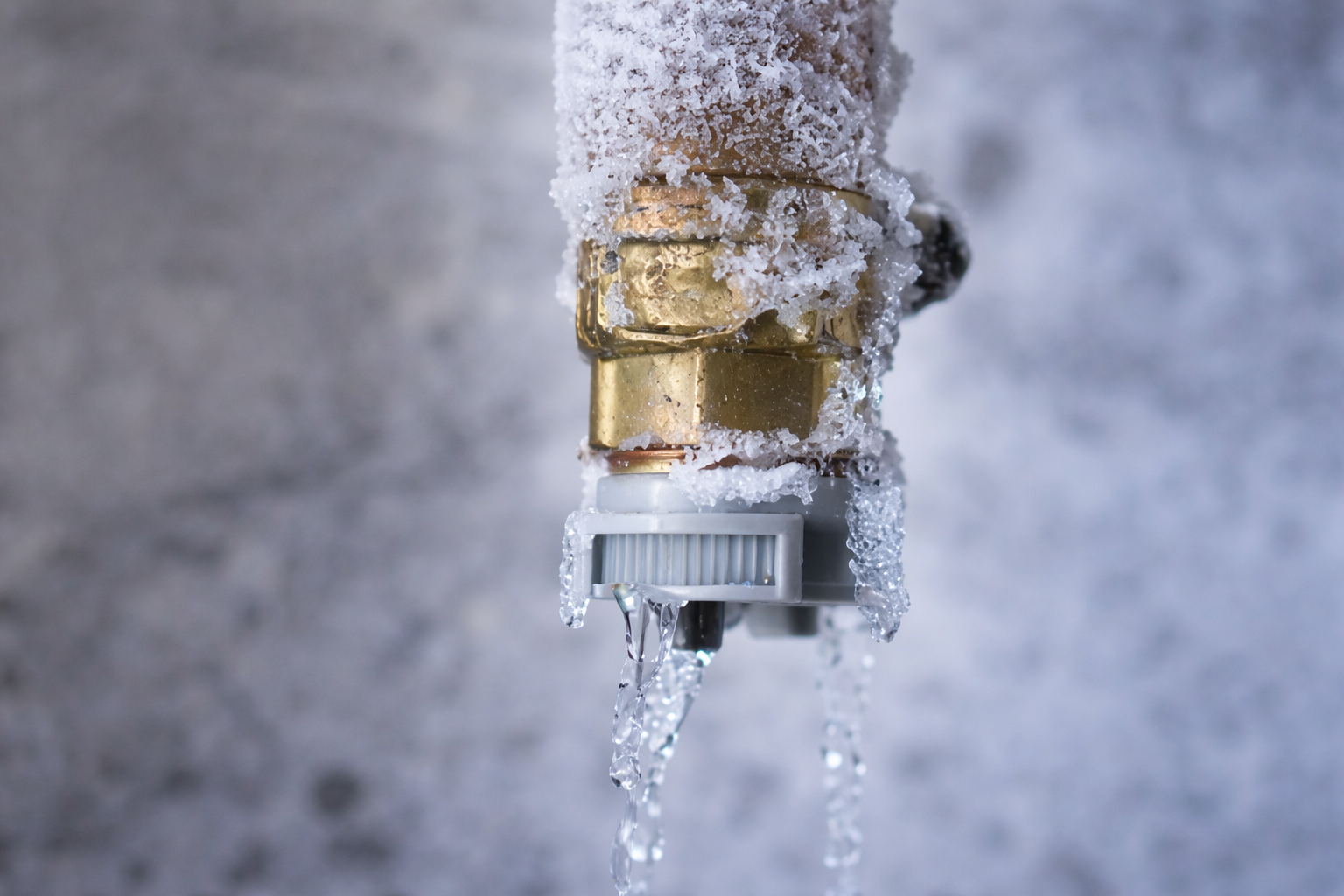
Frozen pipes are one of those home issues most people don’t think about—until they’re suddenly dealing with water where it doesn’t belong.
What makes frozen pipes especially tricky is that the real damage often doesn’t happen when the pipe freezes. It happens after it thaws.
Understanding what’s actually going on inside your plumbing during cold weather can help you prevent costly repairs, water damage, and unnecessary stress.
What Happens When Pipes Freeze
When temperatures drop below freezing, water inside pipes—especially those in exterior walls, crawl spaces, basements, and attics—can begin to freeze.
As water freezes, it expands. That expansion creates pressure inside the pipe. Contrary to popular belief, pipes don’t usually burst at the frozen section itself. They fail between the frozen blockage and a closed valve or faucet, where pressure has nowhere to go.
This is why a pipe can freeze silently overnight and appear “fine” in the morning—only to fail later when temperatures rise and water flow is restored.
Why Frozen Pipes Are So Dangerous
Frozen pipes are dangerous because they’re often invisible until damage is done.
You may not notice:
- Hairline cracks in copper or PVC
- Small separations in joints or fittings
- Stress fractures that only leak under pressure
Once the pipe thaws and water begins flowing again, those weak points can turn into active leaks—sometimes behind walls, under floors, or above ceilings.
That’s how a frozen pipe turns into water damage, mold, or structural repairs far beyond plumbing.
Common Warning Signs of a Frozen Pipe
Some signs are obvious. Others are subtle.
Watch for:
- Little or no water coming from a faucet
- Frost on exposed pipes
- Strange odors from drains (caused by blocked ventilation)
- Unusual noises when turning on faucets
If only one fixture is affected, it’s often a localized freeze. If multiple fixtures are impacted, it may be a larger section of the system.
What to Do If You Suspect a Pipe Is Frozen
First: don’t panic—and don’t force anything.
Here’s what helps:
- Keep the affected faucet open slightly to relieve pressure
- Warm the area gradually using safe heat sources (space heater nearby, warm air circulation—not open flames)
- Open cabinets to allow room heat to reach pipes
- Never use a torch or direct flame
If you can’t locate the frozen section or aren’t comfortable thawing it safely, it’s time to call for help.
How to Prevent Frozen Pipes in the First Place
Prevention is always easier—and less expensive—than repair.
Smart winter steps include:
- Keeping your home heated consistently, even overnight
- Insulating exposed pipes in basements, crawl spaces, and garages
- Sealing air leaks around foundations, windows, and pipe penetrations
- Disconnecting and draining outdoor hoses
- Knowing where your main water shutoff valve is
If you’ll be away during cold weather, never shut the heat off completely. Keeping the home above 55°F can make all the difference.
Why Some Homes Are More at Risk Than Others
Older homes, homes with additions, and properties with unfinished basements or crawl spaces are often more vulnerable.
Plumbing layouts weren’t always designed with today’s insulation standards in mind. Pipes may run closer to exterior walls or through areas that weren’t intended to be conditioned spaces.
That’s why frozen pipe issues often repeat in the same homes—unless the root cause is addressed.
When to Call a Professional
If:
- A pipe has frozen more than once
- You’ve had a previous burst or leak
- You’re unsure where the frozen section is
- You suspect hidden damage after a thaw
…it’s worth having the system evaluated.
Not every frozen pipe leads to failure. But when it does, the cost of waiting is often far higher than the cost of addressing it early.
What you don’t see still matters.
Solid values. Noble results.
📞 Call (302) 218-2943 when it’s time to do it right.