
Advanced Leak Detection Tools: A Homeowner’s Guide to Finding Leaks Before They Cause Damage
Modern leak detection technology can catch a hidden leak long before it turns into a soaked ceiling or a spiked water bill. Here’s a homeowner’s guide to how these tools work, what to look for, and how homeowners in Townsend and the New Castle area can put them to use protecting their plumbing.
Key Takeaways
- Advanced leak detection tools range from simple moisture sensors to whole-home smart water monitors that track usage in real time.
- Sensitivity and placement are what determine whether a device catches a slow leak early or misses it entirely.
- Smart leak detectors with app alerts let homeowners know about a leak the moment it starts, even when they’re away from home.
- Automatic shut-off valves take detection a step further by cutting water supply automatically when a leak is found.
- Environmental factors, like temperature and pipe location, can affect how accurately a device detects a leak.
- Noble Home Services can help homeowners in Townsend and the New Castle area choose and install the right leak protection for their home.
What Are Advanced Leak Detection Tools and How Do They Work?
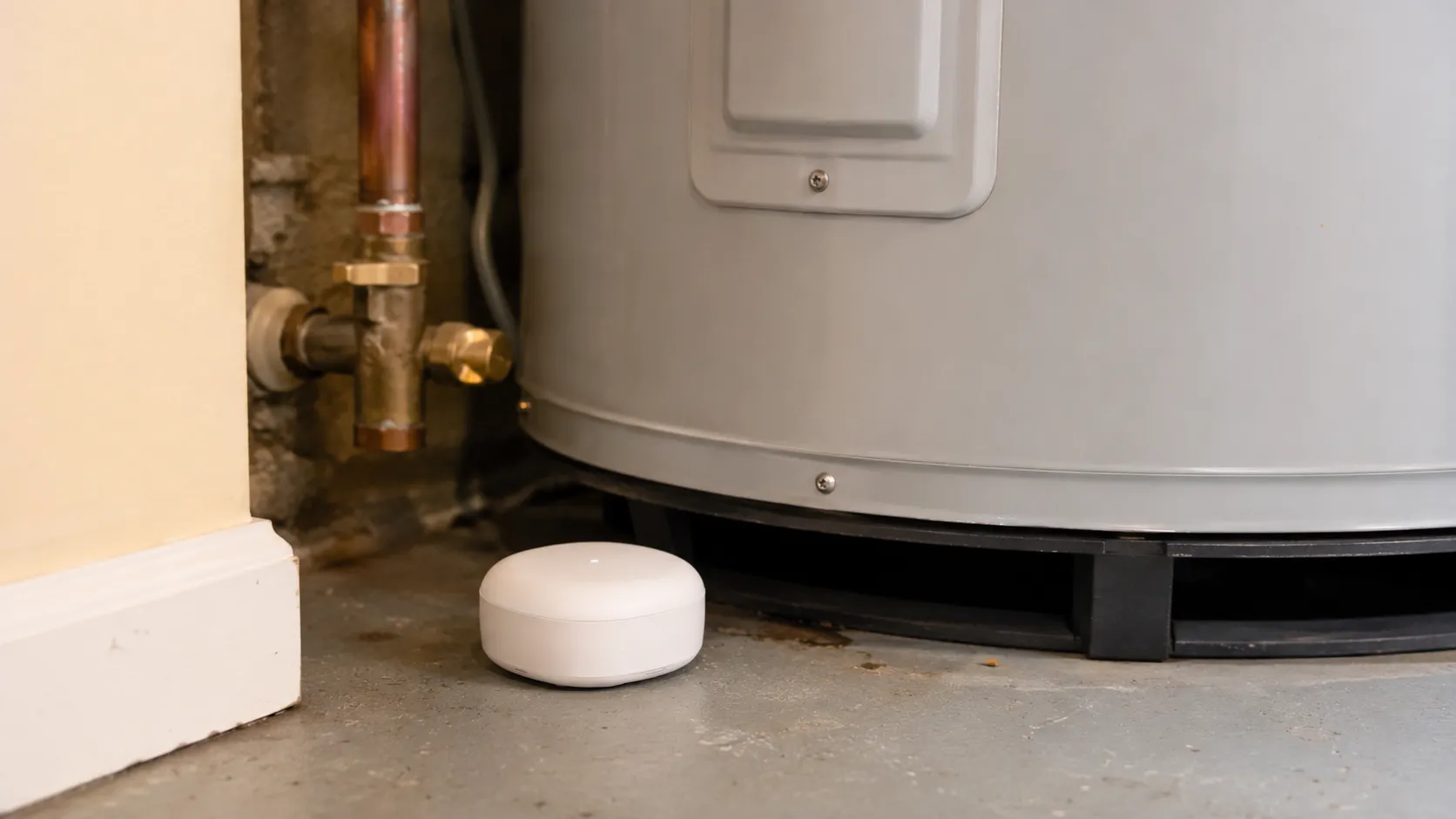
Advanced leak detection tools use sensors – moisture, acoustic, or flow-based – to detect signs of a leak well before it becomes visible to a homeowner. Depending on the technology, a device might sit on the floor near a water heater, clamp onto a pipe to listen for leak sounds, or monitor your home’s overall water flow for unusual patterns.
Which Technologies Are Used in Modern Home Leak Detection Devices?
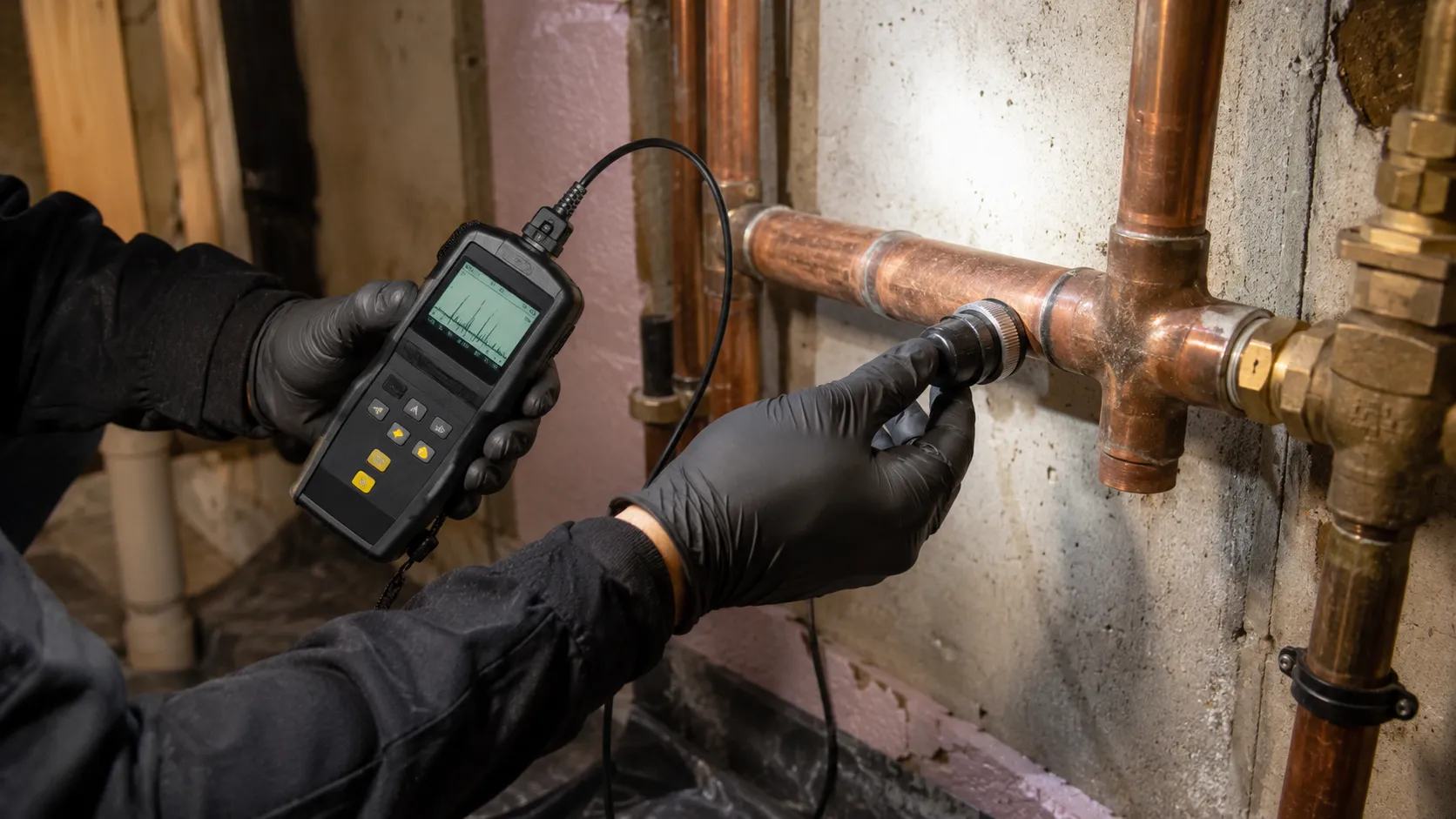
Common technologies include simple moisture sensors that trigger an alert on contact with water, acoustic or ultrasonic detectors that “listen” for the sound of water escaping a pipe (useful for leaks inside walls or underground), and flow-based smart monitors that track your whole home’s water usage and flag unusual spikes.
How Do Advanced Sensors Improve Leak Detection Accuracy?
More advanced sensors can distinguish between normal water use – a shower running, a dishwasher cycle – and the kind of continuous, low-level flow that signals a hidden leak. That distinction is what allows a smart monitor to send a meaningful alert instead of a false alarm every time someone runs the tap.
Why Are Leak Detection Tools Crucial for Home Plumbing and HVAC Systems?
Which Areas of the Home Benefit Most From Leak Detection Technology?
Water heaters, washing machine connections, under-sink plumbing, and AC condensate lines are among the most common sources of undetected home leaks, and each benefits from having a sensor placed nearby. Crawlspaces and basements – where a slow leak can go unnoticed for weeks – are also worth prioritizing.
How Can Leak Detectors Prevent Costly Water Damage at Home?
Catching a leak within minutes or hours, rather than days or weeks, is the difference between a quick repair and a major water damage claim involving flooring, drywall, or mold remediation. For homeowners, that early warning is often the single biggest value a leak detection tool provides.
What Are the Top Features to Look for in a Home Leak Detection Tool?
How Does Sensitivity Affect Leak Detection Performance?
A more sensitive sensor catches smaller, slower leaks earlier, but overly sensitive devices can also trigger false alerts from normal humidity or condensation. Look for a device with adjustable sensitivity if you’re placing it somewhere naturally damp, like a basement.
Why Is Portability and Ease of Use Important in Leak Detectors?
Battery-powered, easy-to-place sensors are simpler to move between areas of concern – under a sink one season, near a water heater the next – without any wiring or professional installation. For homeowners who want broader, whole-home coverage instead, a professionally installed flow-based monitor is usually the better fit.
How Do You Choose the Best Leak Detection Tool for Your Home?
What Are the Cost and Maintenance Considerations?
Simple battery-powered moisture sensors are generally the least expensive option, while whole-home smart monitors with professional installation cost more upfront but offer broader protection. Ongoing maintenance is minimal for most consumer devices – mainly battery replacement and periodic testing to confirm the sensor is still working.
How Do Different Leak Detection Methods Compare for Residential Use?
- Point-of-use moisture sensors: low cost, easy to place, but only monitor the specific spot they’re sitting in
- Acoustic/ultrasonic detectors: better suited for locating a suspected leak in a wall, slab, or underground line
- Whole-home flow-based monitors: the broadest coverage, providing whole-home water monitoring that tracks total water usage and flags anomalies anywhere in the system
What Are the Latest Innovations in Home Leak Detection Technology?
How Are Smart Leak Detectors and Automatic Shut-Off Valves Evolving?
Newer smart leak detectors increasingly pair with automatic shut-off valves, so the system doesn’t just alert you to a leak – it can shut off your home’s water supply automatically before serious damage occurs. That combination is especially useful for homeowners who travel or aren’t home during the day.
What Role Do Wi-Fi and Smart Home Apps Play in Remote Leak Monitoring?
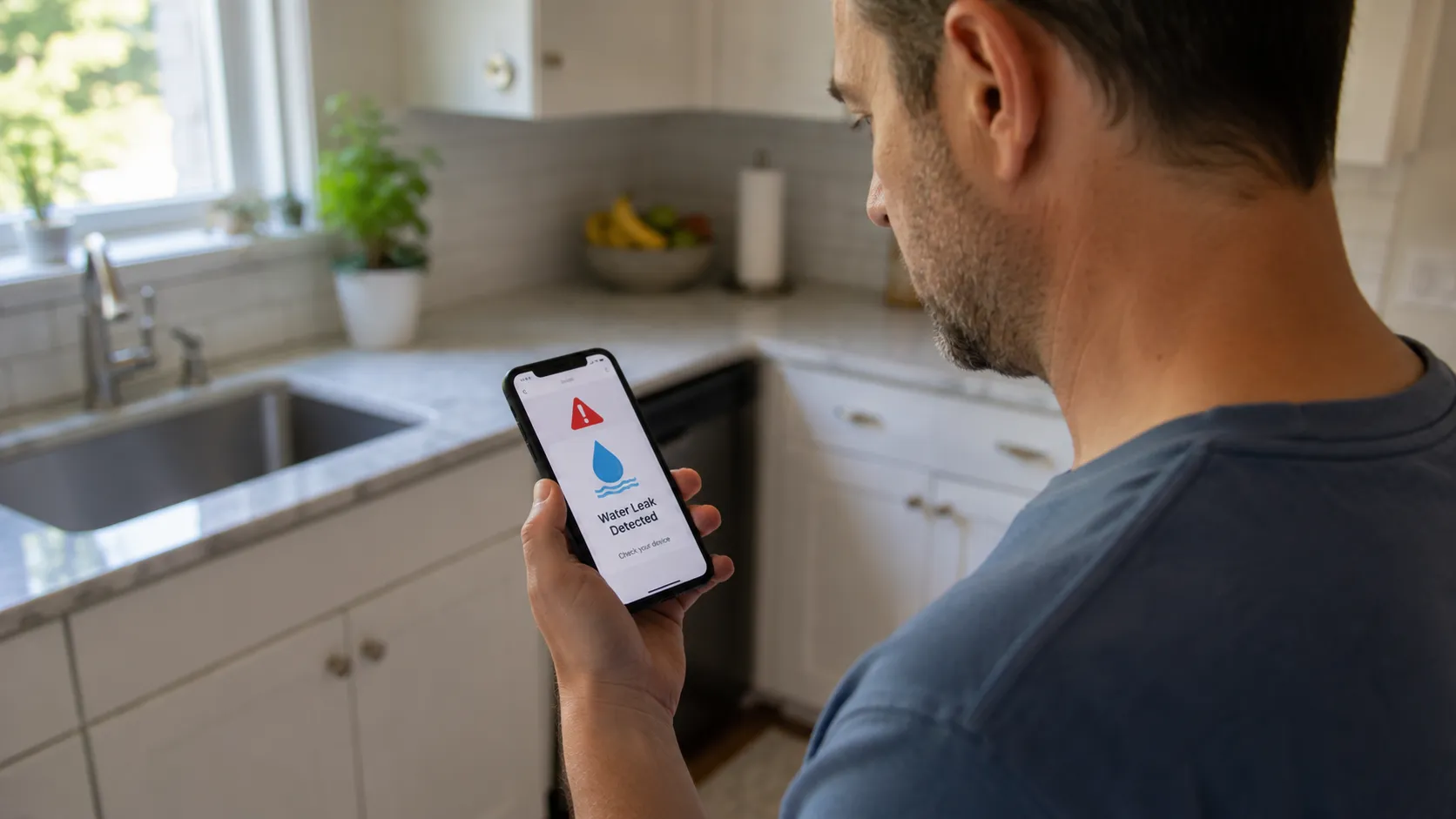
Wi-Fi-connected leak detectors send push notifications straight to a homeowner’s phone the moment moisture or unusual flow is detected, rather than relying on an audible alarm alone. That remote visibility is particularly valuable for a second home, a rental property, or any house where no one’s around to hear a local alarm going off.
How Can You Ensure Accurate Leak Detection Results Using Advanced Tools?
What Are Best Practices for Placing and Testing Home Leak Sensors?
Place sensors low to the ground near common leak points – water heaters, washing machines, under sinks, and sump pumps – since water naturally pools at the lowest available spot. Test each device periodically (many have a test button or app-based check) to confirm it’s still functioning and connected.
How Do Environmental Factors Impact Leak Detection Accuracy?
Extreme temperatures, high ambient humidity, and a device’s distance from your Wi-Fi router can all affect how reliably a smart leak detector performs. Placing a moisture sensor in a spot with normal condensation – like near an AC unit – without adjusting its sensitivity can also lead to frequent false alarms.
Frequently Asked Questions
Do I need a professional to install a leak detection system? Simple battery-powered moisture sensors don’t require professional installation, but whole-home flow-based monitors and automatic shut-off valves generally do, since they tie into your main water line.
Can a leak detector lower my homeowners insurance costs? Some insurers offer discounts for homes with smart leak detection or automatic shut-off systems installed – it’s worth asking your provider directly, since policies vary.
How many leak detectors does the average home need? It depends on the home, but placing one near each major water source – the water heater, washing machine, and under key sinks – covers most of the highest-risk spots without needing dozens of devices.
Will a leak detector work if my Wi-Fi goes out? Most smart detectors will still trigger a local alarm without Wi-Fi, but you’ll lose the remote phone notification until the connection is restored.
Does Noble Home Services install whole-home leak detection or shut-off systems? Noble Home Services can help homeowners in Townsend and the New Castle area evaluate their plumbing and recommend the right leak protection setup for their specific home.
Not sure which leak detection setup makes sense for your home? Noble Home Services can walk Townsend and New Castle area homeowners through the options – from a simple sensor near the water heater to a whole-home monitoring system – so you get the coverage that actually fits your house.