
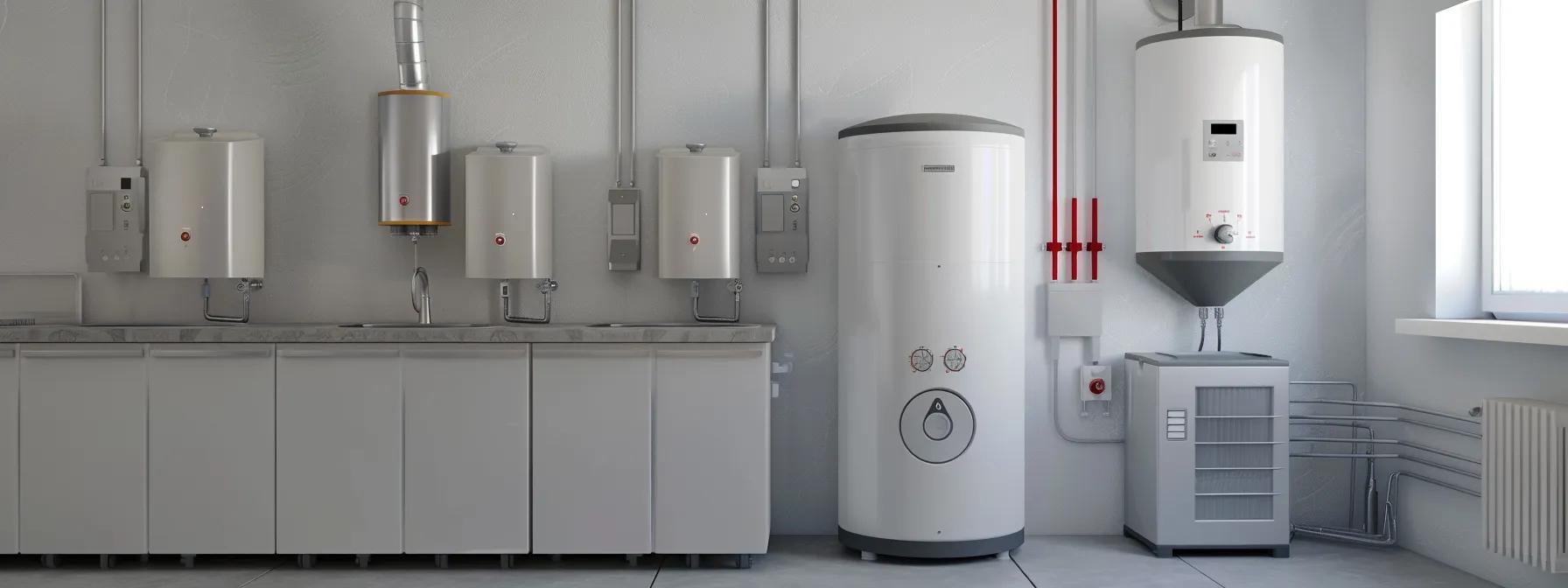
LG Heat Pump Water Heaters 75% More Efficient Than Conventional Water Heaters and How to Claim Federal Tax Credits
Designed to slash energy use and reduce utility bills, LG heat pump water heaters leverage air-source heat transfer and advanced inverter controls to deliver up to 75% greater efficiency than traditional electric resistance or gas-fired units. Homeowners seeking dependable hot water while maximizing savings can unlock federal tax incentives, streamline installation through professional HVAC services, and enjoy long-term environmental benefits. This guide explains:
- What makes LG heat pump water heaters dramatically more efficient
- How to qualify for and claim the 25C Energy Efficient Home Improvement Tax Credit
- Top LG models, performance features, and their cold-climate resilience
- Projected utility bill savings, ROI over time, and additional rebates
- Installation requirements, professional considerations, and maintenance best practices
- The role of ENERGY STAR and the Consortium for Energy Efficiency in eligibility
Whether you’re replacing a conventional unit or installing a hybrid system for the first time, you’ll gain actionable insights to optimize energy efficiency, secure up to $2,000 in tax credits, and lower your household’s carbon footprint.
What Makes LG Heat Pump Water Heaters 75% More Efficient Than Conventional Models?
LG heat pump water heaters outperform conventional water heaters by extracting ambient heat and moving it into storage tanks rather than generating heat through resistance elements. This approach reduces electrical consumption and leverages inverter-driven compressors to match demand precisely, turning otherwise wasted thermal energy into reliable hot water.
How Does Heat Pump Technology Improve Energy Efficiency?
Heat pump water heaters work by circulating refrigerant through an evaporator coil where it absorbs warmth from surrounding air; an inverter compressor then compresses that refrigerant to higher temperatures before releasing heat into the water storage tank. This refrigeration cycle uses one unit of electricity to move three to four units of thermal energy, achieving 300–400% efficiency compared to 100% conversion in electric resistance models.
By modulating compressor speed, LG units avoid frequent on/off cycling, minimizing energy waste and delivering consistent hot water temperatures.
High Efficiency and Cost Savings of Heat Pump Water Heaters
Heat pump water heaters demonstrate significantly higher energy efficiency, often reaching 300-400% compared to conventional electric resistance models. ENERGY STAR certified units can save households hundreds of dollars annually on electricity bills, with some LG models achieving Uniform Energy Factor (UEF) ratings up to 3.93.
This research supports the article’s claims regarding the dramatic energy efficiency of heat pump water heaters, specific UEF ratings for LG models, and the resulting financial savings for homeowners.
What Are the Key Features of LG Heat Pump Water Heaters That Boost Efficiency?
Before comparing exact efficiency figures, it helps to understand the design features that enable LG to achieve such high performance:
- Variable-Speed Inverter Compressor: Continuously adjusts output to match demand, reducing energy surges
- High-Capacity Heat Exchanger: Maximizes heat absorption from ambient air with larger coil surface area
- Multi-Mode Operation: Auto, hybrid, high-efficiency, and electric-only settings optimize performance by season
- Quiet Operation: Low-sound compressor and fan minimize noise while preserving efficiency
- Intelligent Defrost Cycle: Automatically detects frost build-up and triggers a reverse-cycle defrost
- Rapid Recovery: Faster heat transfer speeds reduce runtime per cycle, cutting overall electricity use
How Do LG Heat Pump Water Heaters Compare Using UEF Ratings?
Uniform Energy Factor (UEF) measures the ratio of useful hot water output to energy input. Below is a comparison of typical units:
LG’s hybrid models deliver roughly four times the efficiency of electric resistance units. Higher UEF translates directly to lower kilowatt-hour consumption and reduced monthly energy costs.
What Environmental Benefits Result from Using LG Heat Pump Water Heaters?
By operating at three to four times the efficiency of resistance heaters, LG heat pump water heaters significantly reduce greenhouse gas emissions and fossil-fuel dependence. Key environmental outcomes include:
- Cutting carbon footprint by up to 2,500 pounds of CO₂ per household annually
- Reducing peak electrical grid load and easing strain on power plants
- Conserving natural gas when replacing gas-fired units, lowering methane leaks
- Enabling homeowners to participate in broader sustainability goals and local decarbonization programs
Environmental Impact Reduction with Heat Pump Water Heaters
Switching to heat pump water heaters significantly reduces a household’s carbon footprint and greenhouse gas emissions. Studies indicate that replacing a conventional water heater with a heat pump model can reduce CO₂ emissions by over 2,000 pounds annually, equivalent to growing numerous trees.
This citation confirms the environmental benefits highlighted in the article, specifically the reduction in carbon footprint and CO₂ emissions achieved by using heat pump water heaters.
How Can Homeowners Qualify for the Federal 25C Tax Credit on LG Heat Pump Water Heaters?
Homeowners can leverage the 25C Energy Efficient Home Improvement Credit to reclaim 30% of project costs (up to $2,000) for qualifying heat pump water heaters installed by December 31, 2025. This credit applies to the cost of the unit, labor, permitting fees, and associated HVAC services when installed by a licensed professional.
What Is the 25C Energy Efficient Home Improvement Tax Credit?
The 25C credit, enacted under the Inflation Reduction Act, allows a non-refundable tax credit equal to 30% of eligible expenses for energy-efficient upgrades, including heat pump water heaters. Homeowners can claim up to:
- $600 for insulation, doors, and windows (combined)
- $2,000 for heat pump water heaters, biomass stoves, and advanced heat pumps
Expenditures must be incurred for a primary residence in the United States, and claims are filed via IRS Form 5695 when preparing annual individual tax returns.
Federal Tax Credits for Energy-Efficient Home Improvements
The federal 25C Energy Efficient Home Improvement Tax Credit, enacted under the Inflation Reduction Act, offers homeowners a non-refundable tax credit of 30% of project costs, up to $2,000, for qualifying heat pump water heaters. Eligibility requires ENERGY STAR certification and meeting the Consortium for Energy Efficiency’s (CEE) highest efficiency tier, with the credit available for installations completed by December 31, 2025.
This citation verifies the details of the 25C federal tax credit, including the credit amount, eligibility criteria (ENERGY STAR and CEE tiers), and the expiration date, as outlined in the article.
Which LG Heat Pump Water Heater Models Are Eligible for the 25C Tax Credit?
Eligibility requires ENERGY STAR certification and meeting the Consortium for Energy Efficiency’s (CEE) Tier 3 or higher standard. LG models that qualify include:
- LG 50-Gallon Hybrid Heat Pump Water Heater (UEF 3.45)
- LG 60-Gallon High-Efficiency Hybrid Heat Pump Water Heater (UEF 3.93)
- LG 80-Gallon XL Hybrid Heat Pump Water Heater (UEF 3.85)
How Do You Apply for the Federal Tax Credit for Heat Pump Water Heaters?
Claim your credit by completing IRS Form 5695, Part II. Steps include:
- Record total eligible installation costs (unit price, labor, HVAC services)
- Enter costs on Line 6 of Form 5695 (Heat Pump Water Heater)
- Calculate 30% credit and transfer the amount to Form 1040, Schedule 3
- Retain manufacturer’s certificate and installer’s invoice for IRS records
Accurate documentation and licensed HVAC installation are crucial for a smooth audit-ready claim.
When Does the 25C Tax Credit Expire and What Are Important Deadlines?
The current credit window extends through December 31, 2025. Key dates:
- Project must be completed and paid by 12/31/2025
- Tax credit claimed on the annual return for the tax year in which installation occurred
- Receipt of equipment and proof of ENERGY STAR certification required before filing
Planning installations well ahead of year-end ensures eligibility and avoids last-minute scheduling challenges.
Which Are the Best LG Heat Pump Water Heater Models for Efficiency and Savings?
LG offers a range of capacities to fit household demands while preserving peak efficiency. Three leading models are:
What Are the Differences Between LG 53, 58, and 80 Gallon Heat Pump Water Heaters?
Below is a comparison of core specifications:
How Does LG’s Inverter Technology Enhance Model Performance?
LG’s inverter compressor continuously adjusts rotational speed to maintain desired tank temperature with minimal fluctuations. Benefits include:
- Reduced start-stop losses that occur in fixed-speed compressors
- Smoother temperature control, resulting in consistent hot water delivery
- Lower noise levels and extended compressor lifespan
By matching output precisely to demand, inverter systems cut energy use and reduce mechanical stress.
What Are the Noise Levels and User Experience Features of LG Models?
LG heat pump water heaters maintain whisper-quiet operation between 40–50 dB—roughly the sound of a household refrigerator—while offering:
- Integrated Wi-Fi connectivity for remote temperature adjustment
- Touchscreen control panel with usage history and filter-cleaning reminders
- Automatic defrost notifications to sustain efficient operation
How Do LG Models Perform in Cold Climates?
When ambient temperature drops below 40 °F, LG units switch to hybrid or electric-only mode, ensuring uninterrupted hot water. A built-in ambient sensor and defrost cycle remove ice build-up, and auxiliary electric elements provide backup heating. Even in temperatures as low as 20 °F, LG systems maintain delivery efficiency around 200–250%, outperforming many standalone heat pumps.
How Much Can You Save on Utility Bills with an LG Heat Pump Water Heater?
Switching to an LG heat pump system typically cuts water-heating electricity use by 65–75%, translating into significant annual savings.
What Are the Typical Annual Energy Savings Compared to Conventional Water Heaters?
A standard 50-gallon electric resistance heater consumes about 4,500 kWh per year. LG’s 50-gallon hybrid model uses approximately 1,300 kWh. Savings breakdown:
- Conventional electric: 4,500 kWh × $0.13/kWh = $585/year
- LG hybrid: 1,300 kWh × $0.13/kWh = $170/year
- Annual savings: $415
These figures vary with local rates and usage, but average households save $300–$500 annually.
How Does the Return on Investment (ROI) Look Over 5, 10, and 15 Years?
Analyzing lifetime savings yields compelling ROI:
Long-term savings far exceed upfront investment, especially when factoring in tax credits and rebates.
What Additional Rebates and Incentives Can Maximize Your Savings?
Beyond federal tax credits, homeowners may qualify for:
- State energy office rebates of $200–$500
- Local utility incentives covering $100–$600
- Manufacturer mail-in rebates or financing offers
Combining these programs with the 25C credit can offset more than half of total project costs, accelerating payback.
What Are the Installation Requirements and Considerations for LG Heat Pump Water Heaters?
Proper installation ensures peak performance, warranty compliance, and tax credit eligibility. Space, electrical, and ventilation factors are critical.
What Space and Electrical Needs Are Specific to LG Heat Pump Water Heaters?
LG units require:
- Minimum 750 ft³ of unobstructed ambient space or dedicated mechanical closet
- Inlet air temperature between 40–90 °F
- 240 V, 30 A dedicated circuit with GFCI protection
- Proper condensate drain to sanitary line or floor drain
- Clearance: 2 inches around tank, 24 inches above for service access
Adequate room for airflow and serviceability preserves efficiency and prolongs unit life.
Why Is Professional HVAC Installation Recommended for LG Units?
Certified HVAC technicians bring specialized tools, refrigerant handling certification, and code knowledge.
- Verifies refrigerant charge and leak-free refrigerant circuit
- Configures inverter settings and defrost parameters
- Ensures compliance with local mechanical, electrical, and plumbing codes
- Provides documentation needed for tax credit claims and manufacturer warranty
This expertise safeguards maximum efficiency, reliability, and incentive eligibility.
How Does Installation Affect Eligibility for Tax Credits and Rebates?
To satisfy IRS and utility program requirements, installations must be:
- Completed by a licensed contractor, with valid HVAC service credentials
- Documented with itemized invoices listing labor, unit cost, and certification labels
- Supported by manufacturer’s certification statement for ENERGY STAR qualification
Accurate installation paperwork ensures smooth processing of federal and local incentives.
How Do You Maintain and Troubleshoot Your LG Heat Pump Water Heater?
Routine care keeps performance high and extends unit lifespan. Simple tasks prevent common issues.
What Are Common Maintenance Tasks for LG Heat Pump Water Heaters?
Regular upkeep includes:
- Cleaning or replacing the air-filter every 6 months
- Inspecting condensate drain and trap for obstructions
- Wiping down heat-exchanger coil to remove dust buildup
- Checking temperature and pressure relief valve annually
Consistent maintenance preserves airflow, prevents inefficiencies, and reduces service calls.
How Can Homeowners Troubleshoot Frequent Issues?
When facing common alerts:
- Error code “E1” (Low Temp): Ensure ambient air is above 40 °F or switch to hybrid mode
- Filter clog warnings: Remove and wash filter, then reset filter timer
- No hot water: Verify circuit breaker, thermostat settings, and compressor run-status
- Excessive noise: Check for loose panels, vibration pads, or obstructed airflow
Following the user manual’s troubleshooting flowchart resolves most minor faults without service visits.
What Warranty and Support Options Does LG Offer?
LG provides:
- 10-year limited warranty on compressor and heat exchanger
- 6-year limited parts warranty on tank and controls
- Optional extended service plans for labor coverage
- Online support portal and 24/7 customer hotline
Robust coverage and responsive support reinforce peace of mind and long-term performance.
What Role Do ENERGY STAR and the Consortium for Energy Efficiency Play in LG Heat Pump Water Heater Eligibility?
Certifications from ENERGY STAR and the Consortium for Energy Efficiency validate efficiency claims and unlock incentives for homeowners.
Why Is ENERGY STAR Certification Essential for Tax Credit Qualification?
ENERGY STAR tests and verifies performance under standardized conditions, ensuring:
- UEF ratings meet or exceed minimum thresholds
- Sound levels and standby losses fall within acceptable limits
- Third-party verification bolsters credibility for IRS and utility programs
Without the ENERGY STAR label, units are ineligible for the 25C credit and many local rebates.
How Does the Consortium for Energy Efficiency Define the Highest Efficiency Tier?
The CEE Tier 3 standard requires UEF ≥ 2.5 for electric heat pump water heaters.
LG hybrid models with UEF ≥ 3.4 surpass this benchmark, ensuring:
- Eligibility for federal and state incentives
- Top-tier classification in efficiency programs
- Clear performance differentiation in rebate applications
High CEE tier placement signals leading-edge efficiency and greater financial returns.
How Do These Certifications Impact Performance and Savings?
Certifications translate to:
- Verified energy consumption metrics for accurate savings projections
- Confidence in long-term reliability due to rigorous testing protocols
- Streamlined incentive processing, reducing homeowner paperwork
By meeting ENERGY STAR and CEE Tier 3 standards, LG units deliver both performance assurance and financial advantage.
Installing an LG heat pump water heater combines cutting-edge inverter technology, federal tax incentives, and utility rebates into a powerful solution for modern homeowners. With proper professional installation, routine maintenance, and ENERGY STAR certification, these units offer compelling ROI, substantial carbon reductions, and whisper-quiet operation—making them a smart choice for efficient, eco-friendly hot water all year round.