
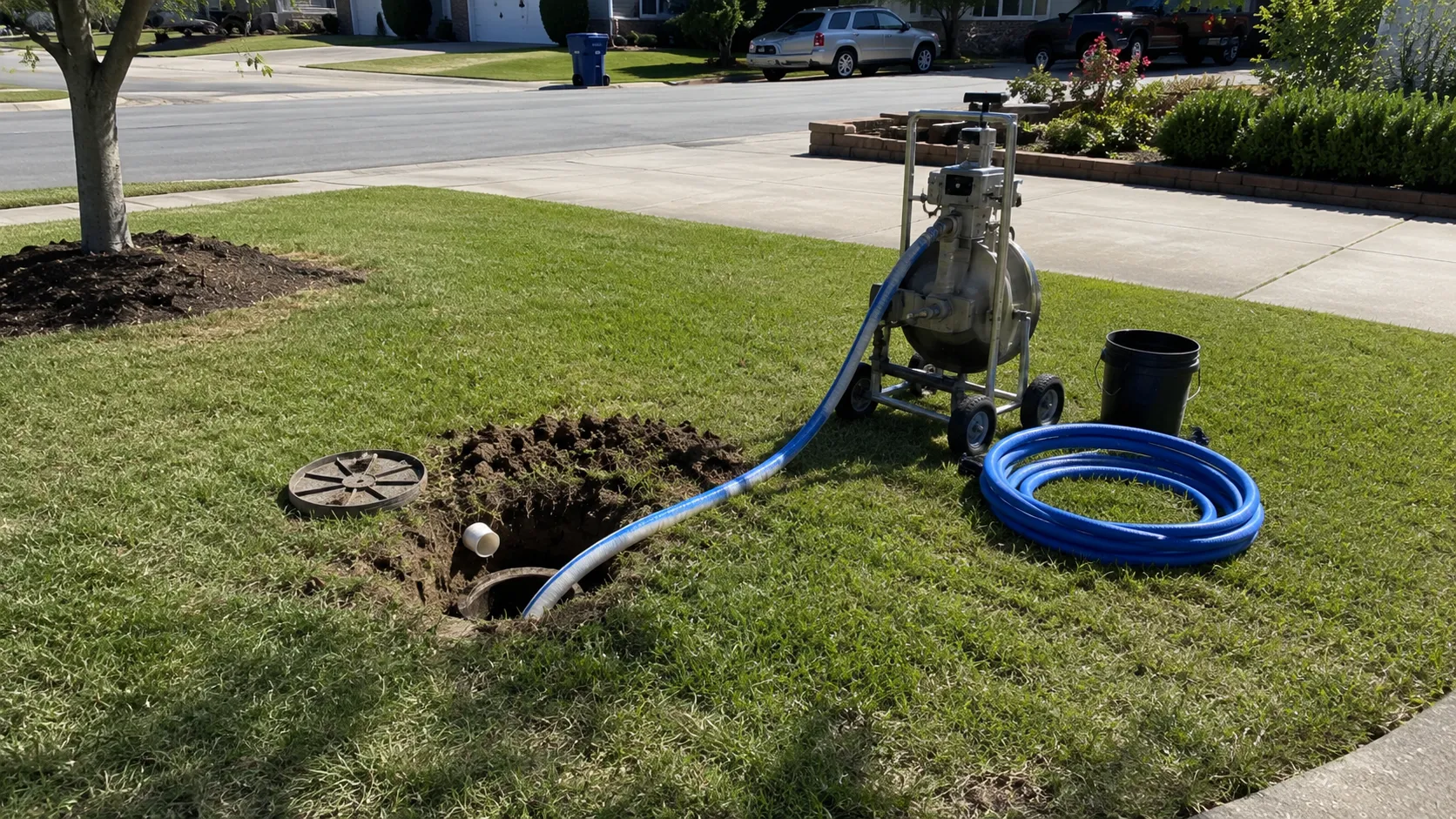
What Are the Benefits of Choosing Trenchless Sewer Repair Over Traditional Methods in New Castle County?
When it comes to trenchless vs traditional sewer repair, choosing trenchless generally means less cost in restoration, a faster repair timeline, and far less disruption to your yard or driveway. For homeowners weighing sewer repair Townsend DE and elsewhere across Middletown, Odessa, Blackbird, and the rest of New Castle County, that difference can make trenchless the clear choice when a damaged sewer line qualifies for it.
Key Takeaways
- Trenchless sewer repair typically costs less overall than traditional excavation once restoration expenses are factored in.
- Most trenchless repairs are completed in a single day, compared to the multi-day or multi-week timelines traditional excavation can require.
- Landscaping, driveways, and patios are largely left untouched with trenchless methods, since repairs happen through existing access points.
- CIPP lining and pipe bursting are the two primary trenchless methods, each suited to different pipe conditions.
- Not every sewer line qualifies for trenchless repair – a proper inspection determines whether it’s the right fit.
- Noble Home Services uses LightRay UV-cured lining technology and always inspects before recommending a repair method.
What Are the Benefits of Choosing Trenchless Sewer Repair Over Traditional Methods?
The advantage of trenchless repair comes down to how it accesses the pipe. Traditional excavation opens a trench along the full length of the damaged line, which is why it touches cost, timeline, and property condition all at once. Trenchless methods instead work through one or two existing entry points – typically a cleanout or a small access pit – and rebuild or replace the pipe from there. That single difference in approach is what drives the cost, speed, and disruption advantages covered in detail throughout this article, and it’s also why not every damaged line is automatically a candidate: the pipe has to be in a condition that allows access and repair from those entry points, which is exactly what an inspection is for.
Why Is Trenchless Sewer Repair More Cost-Effective Than Traditional Excavation?
How Does Trenchless Repair Reduce Overall Project Costs?
Traditional excavation often requires tearing up a lawn, driveway, or walkway to reach a damaged pipe, and restoring that surface afterward – regrading, reseeding, repouring concrete – can add thousands of dollars on top of the repair itself. Trenchless methods skip most of that restoration bill by working through existing access points, which is a large part of why the total project cost often comes in lower even when the per-foot repair price is similar.
What Are the Typical Cost Comparisons Between Trenchless and Traditional Methods?
As a general industry guideline for sewer line repair cost, traditional excavation runs roughly $50 to $250 per linear foot before restoration, while trenchless repair (CIPP/UV lining) runs roughly $80 to $250 per linear foot – but with a fraction of the added restoration cost. These are general ranges, not Noble Home Services’ specific pricing; an accurate number depends on your property and only comes after an inspection.
How Much Faster Is Trenchless Sewer Repair Compared to Traditional Methods?
What Is the Typical Duration for CIPP Lining and Pipe Bursting Repairs?
Many trenchless repairs, including the CIPP/UV-cured lining Noble Home Services uses, are completed in a single day. Traditional excavation, by comparison, often takes considerably longer once digging, pipe replacement, backfill, and surface restoration are all factored in.
How Does Reduced Repair Time Benefit Homeowners and Businesses?
A faster repair means less time without full use of your plumbing, less time with equipment parked in your yard or driveway, and a quicker return to normal for your household or business. For homeowners in New Castle County juggling work and family schedules, that shorter timeline is often as valuable as the cost savings.
What Types of Property Disruption Does Trenchless Sewer Repair Avoid?
How Does Trenchless Technology Protect Landscaping, Driveways, and Patios?
Because trenchless repair works through existing cleanouts or small access points rather than a long trench, mature landscaping, driveways, patios, and other hardscaping are largely left intact. That’s a meaningful difference for homeowners in Odessa, Blackbird, and Townsend who’ve invested in their yards and don’t want a repair project undoing that work.
Why Is Reduced Excavation Important for Maintaining Property Value?
Less excavation means less risk of long-term damage to mature trees, established landscaping, or hardscaping features that add to a home’s curb appeal and resale value. Avoiding a torn-up yard or a patched section of driveway also means one less thing a future buyer or appraiser might flag.
What Are the Primary Trenchless Sewer Repair Methods and Their Benefits?
How Does Cured-in-Place Pipe (CIPP) Lining Work and What Are Its Advantages?
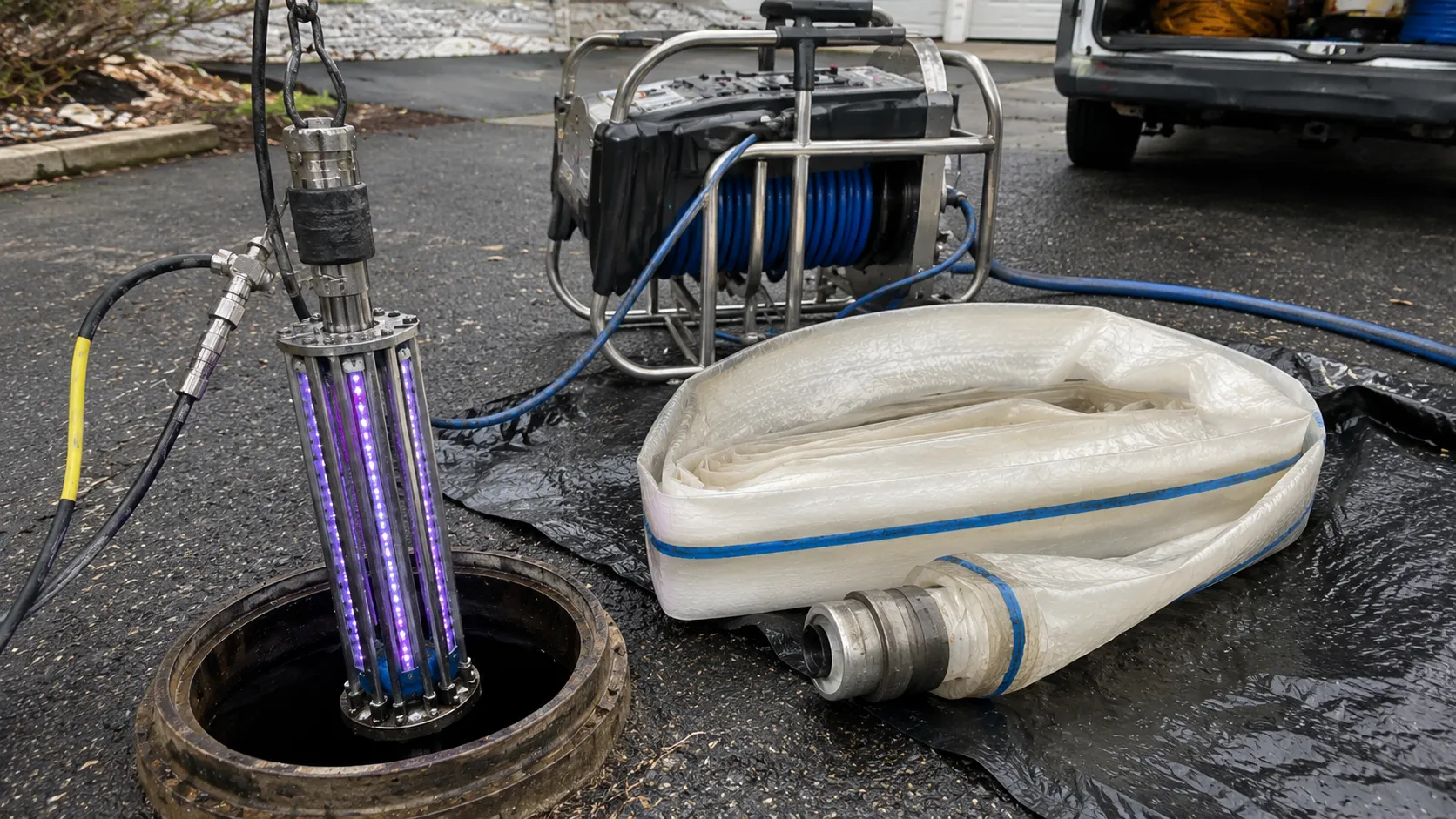
CIPP lining repairs an existing sewer line from the inside by inserting a resin-saturated liner and curing it in place – with Noble’s LightRay technology, that curing happens using ultraviolet light – creating a seamless new pipe within the old one. The main advantages are minimal digging, a fast turnaround, and a liner designed to restore structural integrity and last for decades.
How Does Pipe Bursting Replace Old Sewer Lines Without Major Excavation?
Pipe bursting is a different trenchless technique used more broadly across the industry: a new pipe, often HDPE (high-density polyethylene), is pulled through the old line while a bursting head fractures and displaces the damaged pipe outward. It’s generally used when a pipe is too deteriorated for lining alone to restore function. If your situation calls for something beyond CIPP lining, Noble’s inspection process is what determines the right path forward.
When Is Trenchless Sewer Repair the Right Choice Over Traditional Methods?
What Pipe Conditions Are Suitable for Trenchless Repair?
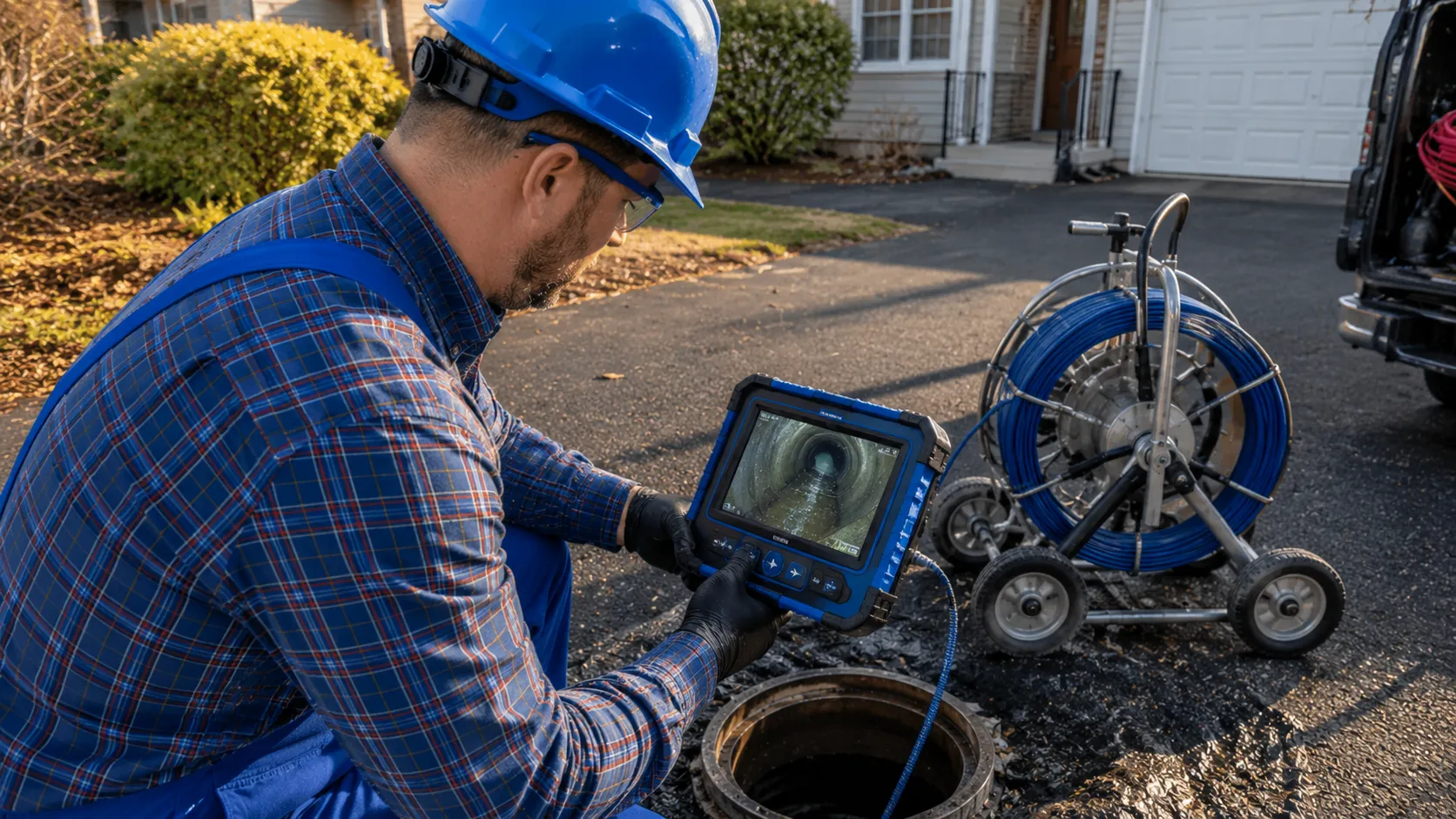
Trenchless repair generally works well for cracks, minor-to-moderate root intrusion, and pipes that are structurally sound enough to support a new interior liner. It’s a big part of why Noble Home Services inspects the line first – not every pipe is a good candidate, and they won’t recommend it if it isn’t.
When Is Traditional Excavation Necessary Instead of Trenchless Repair?
Severely collapsed pipes, major misalignment, or lines with extensive structural failure typically need traditional excavation instead, since there isn’t enough intact pipe left to line or burst through safely. A camera inspection is usually what reveals whether a line falls into this category.
How Does Trenchless Sewer Repair Ensure Long-Term Durability and Performance?
What Is the Expected Lifespan of CIPP Liners and HDPE Pipes?
Noble states its UV-cured liners can last up to 50 years when properly installed. That figure is in line with the broader industry, where well-installed CIPP liners and HDPE pipe are commonly cited as having service lives reaching 50 years or more under normal conditions – though actual lifespan still depends on installation quality and site conditions.
How Does Trenchless Repair Prevent Common Sewer Line Problems Like Root Intrusion?
Root intrusion almost always starts at a weak point – an aging joint, a hairline crack, or a small gap where sections of pipe meet – since roots are drawn to the moisture escaping there. Older clay and cast iron lines in particular tend to have dozens of these joints along a single run, each one a potential entry point. Because the CIPP and pipe bursting methods described above eliminate those joints rather than just patching around them, homeowners typically see fewer repeat root problems in the years after a trenchless repair than they would after a patch-style fix that leaves the original joints in place.
Frequently Asked Questions
Is trenchless sewer repair always cheaper than traditional excavation? Not always upfront, but it’s often cheaper overall once you factor in the landscaping, driveway, or hardscape restoration that traditional excavation typically requires.
Can trenchless repair fix any type of sewer line damage? No. Trenchless methods work well for many common issues, but severely collapsed or extensively damaged pipes usually still need traditional excavation. An inspection determines which category your line falls into.
How disruptive is a trenchless sewer repair to daily life at home? Much less disruptive than traditional excavation – most trenchless repairs are completed in a single day through small access points, without a large trench across the yard.
Does Noble Home Services offer both CIPP lining and pipe bursting? Noble Home Services specializes in LightRay UV-cured CIPP lining. Ask directly about your specific pipe condition during your inspection to find out which approach fits your situation.
Noble Home Services brings honest, upfront guidance to every trenchless sewer repair project across Townsend, Middletown, Odessa, Blackbird, and New Castle County. When you’re ready to find out if your sewer line qualifies, the team is here to walk you through it.